Go-ing Concurrent: Mastering Concurrency in Go
Understanding Goroutines, Channels, and the Magic Behind Go’s Concurrency Model
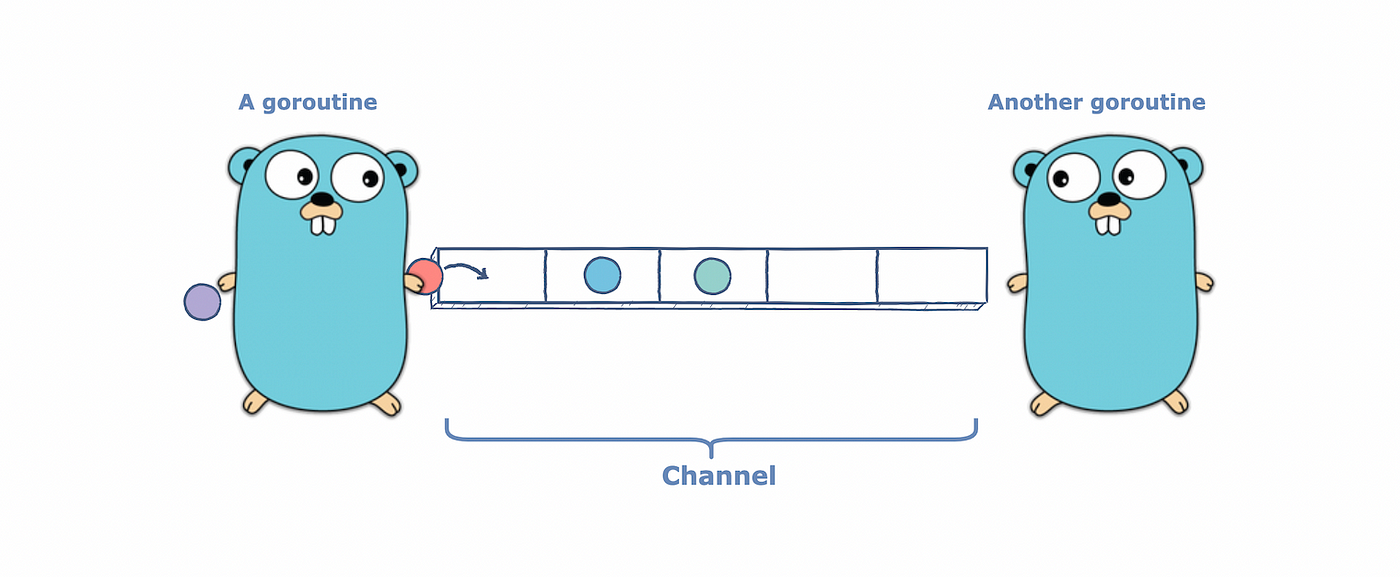
Concurrency is one of the standout features of Go, making it a favourite among developers who want to build high-performable, scalable applications. If you’ve ever found yourself wrestling with threads in other languages, Go’s approach to concurrency is a breath of fresh air. So, let’s dive into what makes concurrency in Go awesome and how you can harness its power!
What’s Concurrency Anyway?
Before we jump into Go’s concurrency model, let’s clear up what concurrency actually means. Concurrency is the ability of a program to handle multiple tasks at the same time. It’s not the same as parallelism, which means running mutiple tasks literally at the same time (e.g. on multiple cores). Instead, concurrency is more about dealing with mutiple tasks efficiently by switching between them.
Enter Goroutines: Go’s Lightweight Threads
In many languages, creating a new thread is expensive in terms of memory and processing power. But in Go, we have goroutines, which are lightweight threads that are ridiculously cheap to create and manage.
Starting a goroutine is as simple as adding go before a function call:
package main

import (
    "fmt"
    "time"
)

func sayHello() {
    fmt.Println("Hello from Goroutine!")
}

func main() {
    go sayHello() // Starts a new goroutine
    fmt.Println("Hello from Main!")
    time.Sleep(time.Second) // Give goroutine some time to execute
}
Without the time.Sleep(), the program might exit before the goroutine gets a chance to run. That’s because the main function doesn’t wait for goroutines to finish unless explicitly told to do so.
Syncing Goroutines: Meet WaitGroups
Goroutines are cool, but managing them can get tricky. If you need to wait for mutiple goroutines to complete, Go provides sync.WaitGroup to help:
package main

import (
    "fmt"
    "sync"
)

func worker(id int, wg *sync.WaitGroup) {
    defer wg.Done() // Decrement counter when done
    fmt.Printf("Worker %d started\n", id)
}

func main() {
    var wg sync.WaitGroup
    for i := 1; i <= 3; i++ {
        wg.Add(1)
        go worker(i, &wg)
    }
    wg.Wait() // Wait for all goroutines to finish
    fmt.Println("All workers finished!")
}
Channels: The Secret Sauce for Communication
if goroutines are the workers , channels are how they communicate safely. Channels allow goroutines to send and recieve data without needing explicit locks.
Here’s a simple example:
package main

import "fmt"

func sendMessage(ch chan string) {
    ch <- "Hello from Goroutine!"
}

func main() {
    ch := make(chan string)
    go sendMessage(ch)
    msg := <-ch
    fmt.Println(msg)
}
Channels ensure safe data sharing without worrying about race conditions.
Buffered Channels: Adding Capacity
By default, channels are unbuffered, meaning sends and receives block until the other side is ready. But you can also create buffered channels to allow storage of mutiple values:
ch := make(chan int, 3) // channel of buffer size 3
This allows sending up to 3 values before it blocks.
Select Statements: Handling Mutiple Channels
Go provides the select statement, which is like a switch for channels, helping handle multiple channel operations elegantly.
package main

import (
    "fmt"
    "time"
)

func main(){
    ch1 := make(chan string)
    ch2 := make(chan string)

    go func(){
        time.Sleep(2 * time.Second)
        ch1 <- "Channel 1 message"
    }()

    go func(){
        time.Sleep(1 * time.Second)
        ch2 <- "Channel 2 message"
    }()

    select {
    case msg1 := <- ch1:
        fmt.Println("Received:", msg1)
    case msg2 := <- ch2:
        fmt.Println("Received:", msg2)
    }
}
When to Use Concurrency in Go?
Concurrency shines in scenarios like:
Web servers handling mutiple requests
Processing large datasets in chunks
Real-time system like chat applications
Background tasks like logging or monitoring
Final Thoughts
Go makes concurrency simple yet powerful. Goroutines and channels provide an elegant way to manage multiple tasks efficiently without the complexity of traditional threading models. Once you get the hang of it, you’ll wonder how you ever managed concurrency before?
So, go ahead and experiment with Go’s concurrency model—your program will thank you for it!
About the author
Passionate about the art of storytelling and the logic of coding, I find joy in exploring new worlds through books and building innovative solutions through programming. Always eager to learn and grow, I blend creativity and technology to craft a unique narrative in everything I do. When I'm not lost in a novel, you'll find me debugging code or exploring the latest in tech.
Comments
Join the discussionNo comments yet. Be the first to comment.